Patient: female, 45 y o.
Transverse myelitis
Date: September 2021

Key Case Details
What is Transverse Myelitis?
Transverse myelitis is an acute inflammatory disease of the spinal cord that damages the myelin sheath of nerve fibers. This leads to impaired conduction of signals from the brain to organs and limbs. In our patient, the disease was triggered by the herpes virus (Herpes Zoster), which caused edema and atrophic changes in the thoracic and cervical spinal cord.
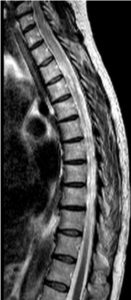
Fig.1. Thoracic spine MRI before treatment

Fig.2. Thoracic spine MRI 4 month after treatment
Comparison of the MRI picture of the spinal cord:
Before treatment: Spinal cord edema C4–Th4 and large inflammatory accumulation Th1–Th10.
After treatment (04.11.2019): The edema completely disappeared. Paramagnetic accumulation of contrast significantly decreased and remained localized only at the micro level of Th7–Th8. Atrophic changes were localized exclusively in the Th5–Th6 segments.
Patient’s Condition Before Therapy
The patient turned to QR Clinic complaining of a complete inability to move independently, loss of sensation in the lower body, and pelvic organ dysfunction.
Results of the Neurological Examination:
MRI of the thoracic spine (from 11.03.2019): Pronounced spinal cord edema at the level of C4–Th4 segments was detected. Paramagnetic contrast accumulation at the level of Th1–Th10 (indicating active inflammation) and initial atrophic changes in the spinal cord at the level of Th5–Th8 were also recorded.
Cell Therapy Program at QR Clinic
Given the infectious and inflammatory nature of the disease, it was decided to use a cell product with high anti-inflammatory and regenerative potential – mesenchymal stromal cells (MSCs) from the umbilical cord.
On July 13, 2019, the patient underwent a combined intravenous administration and intrathecal infusion of a suspension of allogeneic mesenchymal stem cells obtained from the umbilical cord of a healthy donor.
Expected result: Umbilical cord MSCs have a unique ability to suppress autoimmune inflammation, reduce the activity of inflammatory cytokines, and stimulate neuroregeneration (restoration of damaged nerve sheaths).
Dynamics and Treatment Results (after 4 months)
4 months after the stem cell transfusion, the patient underwent a follow-up MRI scan and a neurological examination. The results demonstrated stable positive dynamics.
Restoration of pelvic organ functions:
Improvement of sensitivity and motor functions:
Conclusions
The use of umbilical cord stem cells allowed to quickly stop the active inflammatory process in the spinal cord, which did not respond to standard drug therapy. Elimination of the edema created conditions for partial regeneration of nerve fibers. The patient continues scheduled follow-up (3, 6, and 12 months) and undergoes an active physical rehabilitation course to consolidate the result.
Frequently Asked Questions (FAQ)
Do stem cells help with transverse myelitis?
Yes. Mesenchymal stem cells (MSCs) have an anti-inflammatory effect. They can help eliminate spinal cord edema, protect nerve cells from further destruction (neuroprotection), and promote regeneration of the myelin sheath.
What cells are used to treat myelitis at QR Clinic?
We use autologous (patient’s own) mesenchymal stem cells (MSCs) from the patient’s fat, or allogeneic (donor) cells obtained from the umbilical cord or placenta of healthy donors. They have the highest therapeutic potential and do not cause a rejection reaction.
How quickly do the first treatment results appear?
In the presented clinical case, a significant regression of symptoms (restoration of urinary control, reduction of the level of anesthesia, and restoration of leg movements) was recorded as early as 4 months after therapy, which is confirmed by MRI data.
Just fill the application and one of our specialists will contact you by e-mail, phone, or any other convenient way for you. We will be happy to answer all your questions and provide the necessary information.


